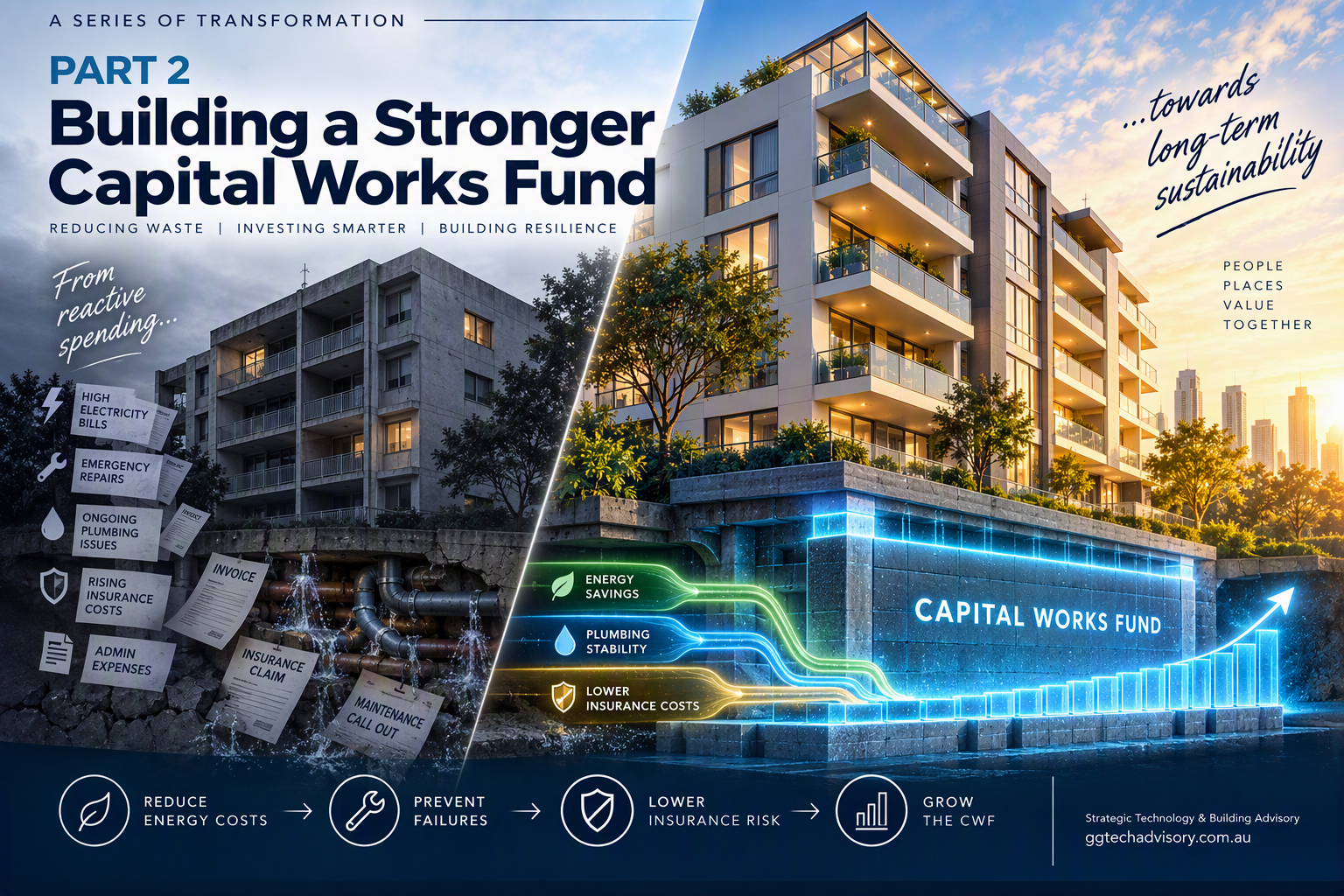
In reviewing the building's financial performance, I noticed a recurring pattern. Much of our expenditure was reactive rather than strategic.
Every year there seemed to be another emergency plumbing callout, another maintenance issue, another administrative expense, or another unexpected repair. Individually these costs appeared manageable, but collectively they were consuming resources that could have been used to improve the building and strengthen the Capital Works Fund (CWF).
Rather than treating every issue as an isolated problem, I categorised expenditure into key areas and tackled them one at a time. The goal was simple: reduce recurring costs, minimise reactive maintenance, and redirect savings into long-term improvements.
Starting with Electricity
Electricity was the first category we addressed.
At the time, the building was consuming approximately 6,000 kWh per month, yet the lighting quality throughout the common areas and garages remained poor.
Rather than accepting standard supplier pricing, I reviewed the entire lighting installation, identified the original distributors, and negotiated improved supply rates directly. I then obtained multiple quotations from electrical contractors and developed a staged replacement programme.
Over two phases, we replaced all common-area and basement lighting with modern dimmable LED fittings.
The results were immediate.
Monthly electricity consumption fell from approximately 6,000 kWh to around 1,200 kWh while delivering significantly better lighting quality and improved reliability throughout the building.
Based on energy savings alone, the project achieved an estimated return on investment of approximately two years. After securing available government energy efficiency rebates, the payback period was effectively reduced to around one year.
What started as a lighting upgrade became one of the most financially effective projects undertaken by the building.
Tackling Reactive Plumbing Maintenance
The next category was plumbing.
A review of maintenance records showed a steady stream of plumbing repairs and callouts. While none of the individual issues were significant on their own, together they represented a recurring operational cost and an ongoing source of disruption.
Rather than continuing to respond to issues as they occurred, I invited several plumbing contractors to inspect the site and provide independent assessments of the building's overall condition.
Following a review of the findings, we delivered a targeted remediation programme addressing identified risks before they developed into larger problems.
The upfront expenditure was greater than simply fixing individual faults as they arose. However, the outcome was a substantial reduction in reactive maintenance requirements and emergency repairs.
Over the following years, the reduction in plumbing related expenditure contributed directly to increased surplus funds available for the CWF.
Reducing Insurance Costs Through Prevention
Insurance represented another area where historical issues continued to impact building finances.
Several water related incidents in previous years had resulted in insurance claims, contributing to significantly increased premiums.
Instead of simply accepting annual premium increases, we focused on reducing the underlying risk.
We organised complimentary plumbing inspections for residents, allowing apartment owners to proactively assess the condition of internal taps, isolation valves, and flexible hoses at no cost.
Where issues were identified, we negotiated bulk pricing arrangements with contractors so residents could undertake preventative replacements immediately after the inspection at significantly lower rates than would normally be available.
The initiative improved awareness, reduced building-wide risk exposure, and helped prevent future water damage incidents.
As claims history improved and overall risk reduced, we were able to explore alternative insurance options and negotiate more favourable coverage.
Over time, annual insurance costs reduced from approximately $55,000 to around $30,000.
The Bigger Outcome
None of these projects were particularly glamorous.
There was no single transformative upgrade or multimillion-dollar redevelopment.
Instead, the focus was on systematically identifying recurring costs, addressing root causes, and eliminating waste.
By reducing energy consumption, minimising reactive maintenance, and lowering insurance costs, the building retained more of its operating budget each year.
That surplus could then be redirected into the Capital Works Fund, creating a stronger financial position while simultaneously improving the building for residents.
The lesson was simple:
Growing the CWF was not primarily about collecting more money. It was about spending existing money more intelligently.
That mindset ultimately created the financial foundation for many of the improvements that followed.